Poker

Poker is a god choice if you want to be able to earn money from gambling

Read More

Videopoker

Videopoker is another good option if you are able to find full pay machines that gives you an edge

Read More

Avoid these games

There are some casino games that you allways should avoid if your goal is to make money.

Read More

The rules of blackjack switch

The rules of blackjack switch

Overview of Blackjack Switch

Blackjack Switch is a captivating variation of the traditional blackjack game that introduces unique features to enhance both excitement and strategic challenges. Unlike the conventional format, this variant allows players to switch cards between two hands, bringing a refreshing twist to the typical gameplay and increasing the depth of strategy involved.

Basic Rules of Blackjack Switch

Blackjack Switch offers players a distinctive edge by integrating the opportunity to manipulate their hands for potential gains. This section delves into the essential rules governing the game and how it differs from standard blackjack.

Dealing and Hands

In Blackjack Switch, each participant receives two separate hands instead of one. Each hand is comprised of two cards, and the players are then presented with the option to exchange the top cards between their two hands. This “switching” mechanism enables players to optimize their hand composition, potentially forming more competitive sets against the dealer.

Setting Up the Game

Typically, Blackjack Switch is played using six to eight decks of standard playing cards. The dealer distributes two distinct hands to each player, comprising two cards each. Players must then decide whether or not to switch the top cards between these hands. This decision forms the core strategic element of the game.

Winning Conditions

The primary objective in Blackjack Switch remains consistent with traditional blackjack: to achieve a hand value closer to 21 than the dealer, without surpassing 21. However, a notable distinction in this variant is the modified payoff for a blackjack hand, which conventionally pays out at 1:1 compared to the traditional 3:2 in standard blackjack.

Switch Rules and Dealer Adjustment

To balance the strategic advantage afforded to players through card switching, the game implements several dealer-favorable rules.

Twenty-Two Push: Unlike traditional blackjack where a dealer bust typically benefits the player, if the dealer busts with a hand totaling 22, all player hands, except those with a natural blackjack, result in a push. This means that no action is taken on the bet, effectively returning the player’s initial wager.

Dealer Hits Soft 17: In many instances of Blackjack Switch, dealers are mandated to hit on a soft 17, potentially augmenting their hand value and tightening the competition against players.

Strategic Considerations

The innovative feature of switching cards in Blackjack Switch introduces a strategic dimension absent in conventional blackjack. Players must prudently assess the advantages of reconfiguring their hands to create stronger combinations against the inherent risks of such a decision.

Players can utilize varied strategies, such as attempting to form a blackjack or improve weaker hands into more competitive formations. Mastering the interplay between risk and reward is essential for success in Blackjack Switch.

House Edge

The house edge in Blackjack Switch is generally elevated compared to classic blackjack, owing to the rule of a 22 push and the even payout for blackjack. With this in mind, players should adapt their strategies to accommodate these rule changes, which are intrinsic to optimizing success in this variant.

Financial Implications

The altered payout and modified rules can significantly impact a player’s overall profitability. Understanding the implications of these changes is crucial for anyone aiming to maintain an edge in Blackjack Switch, necessitating a well-rounded approach to strategizing the gameplay.

Additional Resources

For enthusiasts keen on enhancing their strategic knowledge or discovering locations that host Blackjack Switch games, a plethora of resources can be found online. These include comprehensive guides, casino recommendations, and engaging strategy discussions. By engaging with these materials, players can improve both their understanding and proficiency in this engaging casino game.

For more detailed insights into Blackjack Switch strategies, consider exploring some established gaming resources or visiting casino sites that offer in-depth discussions and analyses. The learning opportunities available through these channels can be instrumental in mastering the intricacies of Blackjack Switch.

The links below can direct you to additional online resources:

These resources can enhance a player’s comprehension of the game, offering seasoned advice and tactics tailored to this specific blackjack variant. Players seeking to refine their skills and approach are encouraged to delve into these materials, maximizing their potential at the Blackjack Switch table.

How to play Spanish 21 blackjack

How to play Spanish 21 blackjack

Understanding Spanish 21 Blackjack

Spanish 21 is an intriguing take on the classic game of blackjack, offering a fresh set of challenges and opportunities for players. This version maintains the essential premises of traditional blackjack but introduces unique rules and features that provide distinct advantages and alter the game’s dynamics. Typically played with either six or eight decks, Spanish 21 differs from standard blackjack through the removal of all the 10s, leaving each deck with 48 cards instead of the usual 52.

Key Rules of Spanish 21

While the core objective of Spanish 21 remains to achieve a hand value closer to 21 than that of the dealer, the absence of 10-value cards introduces new dynamics. This change requires players to adjust their strategies and approach to maximize their chances of success. Despite the absence of these cards, Spanish 21 includes several favorable rules that make the game appealing and strategic.

Player-Friendly Options: Spanish 21 is designed with several player advantages, enhancing the gaming experience:

  • Surrender: Both early and late surrender options are often available, allowing players to give up on a hand they believe to be unwinnable and reclaim half of their wager.
  • Re-splitting and Doubling: Players have the ability to re-split aces and are also allowed to double down on any number of cards, offering more flexibility in their gameplay.
  • Bonus Payouts: Players can benefit from bonus payouts when achieving a 21 with a hand comprised of five or more cards, providing an incentive for strategic hand-building.
  • Beating the Dealer’s 21: When both the player and the dealer end up with a total of 21, the player wins, a rule that shifts the advantage towards the player.

Strategies for Playing Spanish 21

The absence of 10-value cards in Spanish 21 necessitates a modified strategic approach. Here are some strategies tailored for this variation:

Hit More Often: Since the decks lack 10s, your chances of going bust with a hit are reduced. Consequently, you can afford to hit even when your hand total is relatively high, compared to traditional blackjack.

Take Advantage of Bonuses: With the opportunity for bonus payouts when stringing together hands of five or more cards, aim to construct these high-value hands strategically. These bonuses can significantly enhance your overall winnings.

Use Surrender Wisely: Employ the surrender option judiciously, especially when facing hands with low odds of success. This strategy can help minimize potential losses over time, making it an essential tool in Spanish 21.

House Edge and Variations

Spanish 21 is often recognized for offering a more favorable house edge than traditional blackjack, particularly when players are adept at leveraging the game’s advantageous rules. However, it’s important to note that the exact rules and variations of Spanish 21 can differ across casinos, potentially affecting the house edge. Therefore, reviewing the specific house rules in place at your chosen casino before playing is crucial.

Conclusion

Spanish 21 offers a captivating variation on the traditional blackjack structure, enriching the gaming experience with a unique set of rules and the potential for lucrative bonus payouts. By understanding and implementing the game’s specific strategies, players can navigate Spanish 21 effectively, ensuring an engaging and potentially rewarding endeavor. For those interested in further enhancing their skills in blackjack and its variations, it’s advisable to consult resources from esteemed gaming strategy experts and online platforms. Exploring these insights can provide valuable knowledge and boost your proficiency in playing Spanish 21.

The risks of getting caught counting cards

The risks of getting caught counting cards

The Risks of Getting Caught Counting Cards

Understanding Card Counting

Counting cards, a technique used primarily in blackjack, allows players to determine the likelihood of certain cards being dealt in subsequent hands. By keeping a mental tally of high and low cards, players can make informed decisions and alter their bets to gain an advantage over the casino. While the act of card counting itself is not illegal, casinos are well within their rights to deter such practices since it shifts the balance from the house back to the player, potentially threatening casino profits.

Legal Implications

No specific laws outlaw counting cards, providing a legally gray area for practitioners. However, casinos reserve the right to refuse service to patrons they suspect of employing this strategy. If identified as a card counter, one could face removal from the premises and be prohibited from returning, sometimes indefinitely. In certain jurisdictions, the strategic collaboration among casinos allows them to share information about individuals suspected of counting cards. This shared intelligence can lead to a person being banned from numerous gambling venues, significantly limiting their ability to play professionally or recreationally.

Surveillance and Security Measures

Casinos invest heavily in surveillance systems and employ a multitude of tactics to identify and manage card counters. Advanced video surveillance, coupled with facial recognition technology, forms the backbone of their monitoring efforts. Additionally, some casinos hire previous card counters or gaming experts specifically to spot the subtle signs of card counting, focusing on detecting deviations from typical betting patterns. Furthermore, pit bosses and floor staff are trained to watch games closely, alert to behaviors that suggest counting tactics. This combination of human vigilance and technological sophistication represents a formidable challenge for anyone attempting to count cards.

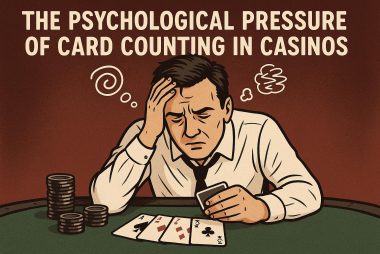
Psychological and Social Consequences

Being caught counting cards can have considerable psychological ramifications. When escorted out of a casino, there is often a significant degree of embarrassment involved, particularly if the event occurs in full view of other patrons. This scenario can be particularly damaging to professional gamblers who depend heavily on their reputation within the gambling community. The label of a card counter carries a social stigma, which can lead to isolation and negatively affect personal and professional relationships within this tight-knit community.

Financial Risks

Card counting also comes with significant financial risks. In some instances, if a player is caught, the casino has the authority to confiscate any chips and winnings accrued during the time the player was counting cards. Such financial setbacks are compounded by the investment players have made in learning and perfecting their card counting skills, as well as in the time they have spent honing their abilities, which may be rendered worthless if they are frequently barred from playing. Additionally, the growing reliance on technology means that even players with honed skills may find their strategies increasingly ineffective due to casino countermeasures.

Technological Countermeasures

In an effort to neutralize card counting, many casinos have introduced technological tools such as continuous shuffling machines or automatic card shufflers. By constantly reshuffling the deck after each hand, these machines effectively randomize the card order, greatly diminishing the practicability and success rate of traditional counting methods. This technological innovation presents a substantial hurdle for card counters, forcing them to either adapt to these changes or consider alternative strategies.

The Ethical Debate

The discussion around the ethics of card counting is ongoing and often contentious. Proponents argue that it is a skill-based strategy requiring considerable mental acuity and practice, akin to any other strategic approach utilized in games. In contrast, detractors argue that card counting takes advantage of predictable patterns in card decks, undermining the principle of random chance which underlies most casino games. This debate continues to fuel discussions within both the gambling industry and the wider public, reflecting differing views on what constitutes fair play.

Alternative Strategies

For those apprehensive about the repercussions of card counting, exploring alternative gambling strategies may prove beneficial. These strategies can offer ways to engage with games of chance without attracting undue attention or flouting casino restrictions. By balancing skill and chance, one can enjoy the excitement of gambling while adhering to casino regulations and avoiding potential conflicts with casino authorities.

Conclusion

Ultimately, card counting, while an intriguing and skill-based approach to blackjack, is rife with risks. Players interested in this method must consider the various implications, from legal and financial to social and psychological, before deciding to employ it. Given the challenges posed by modern surveillance and countermeasures, as well as the potential for reputational damage, prospective card counters might want to evaluate whether the potential benefits truly outweigh the substantial risks involved. Exploring safer and compliant gambling options may be a wiser choice for many.

How to camouflage your card counting strategy in casinos

How to camouflage your card counting strategy in casinos

Understanding Card Counting

Card counting is a strategic tool utilized in the game of blackjack to assess if the subsequent hand is likely to favor the player or the dealer. This technique involves maintaining a running tally of all the high and low cards observed by the player during gameplay. Although not considered illegal, card counting is viewed unfavorably by casinos, which may decisively bar players they suspect are deploying this method.

Basic Principles

The fundamental objective of card counting is to track the proportion of high cards to low cards remaining in the deck. This ratio is crucial, as a higher number of high cards, like tens and aces, leans the odds in favor of the player by enhancing the likelihood of achieving a blackjack or a winning hand. Techniques such as the Hi-Lo system exemplify an efficient approach, wherein high cards are assigned a value of -1, and low cards are valued at +1.

Camouflaging Strategies

Casinos maintain a watchful eye for card counters, making it essential for players to blend seamlessly with others at the table. Here we’ll explore several techniques designed to conceal card counting activities.

Maintain a Casual Demeanor

Adopting a relaxed demeanor at the gaming table can effectively deter suspicion. Professional card counters typically exhibit minimal emotion while playing, blending into the surrounding environment. They often engage in casual conversations with other players or the dealer, appearing more interested in the enjoyment of the game itself rather than remaining intently focused on the cards.

Vary Betting Patterns

One of the most telling signs that a player may be counting cards is inconsistent betting amounts, often correlated with the card count. To obscure this tactic, some players adopt varied betting patterns that appear spontaneous and devoid of correlation to the card count. These patterns are aligned with the natural progression of hands, thus maintaining a lower profile.

Avoid Consistent Wins

Achieving consistent wins can raise several red flags to casino staff. To counter this, players may allow the house to win occasionally by deliberately making a poor decision. This semblance of artificial randomness can be strategically advantageous when the count is high, and a low wager is preferable.

Table Hopping

Frequent changes in tables serve as another effective camouflage technique. By changing tables regularly, players can decrease the likelihood of being recognized by security personnel or casino staff. Nevertheless, it is important to avoid leaving noticeable patterns in movement, as such patterns could inevitably attract attention.

Legal Considerations

It is important to emphasize that card counting does not constitute illegal activity since it doesn’t necessitate the use of devices or external aid. Nonetheless, casinos reserve the right to deny service to anyone they suspect of utilizing card counting. Therefore, being well-versed in understanding casino policies and the specific legal interpretation in a given location can be advantageous.

Concluding Thoughts

While card counting can provide significant benefits, it is crucial to recognize that casinos are adept at identifying counters. Employing strategies to mask these methods allows players to continue card counting with lessened risk. Mastering the art of blending in, paired with the execution of effective card-counting strategies, can enable protracted and successful gameplay. However, it is essential to remember that, apart from proficiency in counting, the essence lies in discretion.

How to spot favorable decks for card counting

How to spot favorable decks for card counting

Understanding Card Counting and Favorable Decks

Card counting is a strategic approach predominantly employed in the blackjack arena, allowing players to assess the probability of impending cards by monitoring those that have already been played. The core idea is to gain an edge over the casino by anticipating the types of cards that are more likely to appear next. This method involves straightforward arithmetic and requires players to sustain a running count that can highlight when the deck favors the player. In a setting where skill and strategy dominate, recognizing favorable decks becomes a crucial aspect of gameplay.

The Basics of Card Counting

At the heart of card counting lies the assignment of values to each card as it is dealt. Cards numbered from 2 to 6 are counted as +1, serving as indicators that more high cards remain in the deck. Cards ranging from 7 to 9 are considered neutral, with a value of 0, as their influence on the game is minimal. Higher cards, including all 10s and face cards, as well as Aces, carry a value of -1, suggesting that fewer of these cards benefit the player. The ongoing calculation of this running total provides significant insights into the deck’s current makeup, helping players to gauge their actions better.

Identifying Favorable Decks

The identification of a favorable deck is linked intrinsically with the concept of the true count. This is an adjustment of the running count, accounting for how many decks are yet to be dealt. To compute it, one divides the running count by the estimated number of decks remaining. A substantial true count indicates a deck potentially rich in high-value cards, thus enhancing the player’s potential for gains through hands like blackjacks or by increasing the probability of the dealer busting.

Observing Other Players’ Hands

Keeping an eye on the hands of fellow players can offer valuable insights into the distribution of high and low cards. Should numerous players draw low-value cards, it can enhance the overall count, indicative of a deck heavy with high cards. This observational tactic becomes an integral part of card counting strategy, allowing for more accurate decision-making.

Deck Penetration

Deck penetration is a concept that pertains to the amount of the deck that is used before reshuffling occurs. The greater the penetration, the more effective the card counting becomes, as players have a more detailed view of the remaining deck. Therefore, players often seek out tables with dealers who use a shoe or a hand-dealt game format that permits extensive deck penetration.

Recognizing Dealer Behavior

In many casinos, rules are in place that allows dealers to shuffle the deck when they perceive that players might gain an advantage. Observing and understanding these shuffling patterns can significantly impact a player’s strategic decisions, as it indicates when one should remain at a table or relocate. Dealers who are inclined to shuffle less often offer counters an improved opportunity to exploit favorable counts.

Adapting Strategies Based on Deck Favorability

Upon detecting a favorable count, players can optimize both their betting and playing strategies. One prevalent approach is to increase bet sizes substantially when the count is high, effectively maximizing potential profits. Alterations in play strategy might also include standing on hard 16s against a dealer with a low card or doubling down in situations that would otherwise seem unfavorable based on traditional play methods.

Bankroll Management

Efficient bankroll management is crucial to capitalize on favorable decks effectively. Understanding when to enhance bet amounts and by what margin is vital to leveraging positive counts to their fullest. This level of management ensures that the player’s resources are utilized effectively, reducing the risk of significant losses and optimizing potential gains.

Conclusion

Mastering the ability to spot favorable decks significantly enhances the efficacy of card counting techniques. It involves acute observation of the game, astute understanding of card distribution dynamics, and the maintenance of an accurate count. Players capable of identifying and leveraging favorable conditions possess not only a mathematical edge but also an astute appreciation of the game’s flow. For further inquiries into card counting strategies and deck selection, seeking out additional resources from acknowledged casino strategy websites might prove beneficial. These often offer insights from both seasoned players and experts, providing a more comprehensive understanding of card counting nuances.

This overview provides a foundation for those interested in deepening their understanding of card counting and favorable deck strategies. By practicing these techniques in conjunction with a disciplined approach to bankroll management, players can increase their chances of success in the game of blackjack. The aforementioned practices require not only analytical skills but also a keen sense of observation and timing—attributes that can turn the tables in the player’s favor when utilized correctly.

The role of back-counting (Wonging) in blackjack

The role of back-counting (Wonging) in blackjack

The Concept of Back-Counting in Blackjack

Back-counting, often referred to as Wonging, is a nuanced blackjack tactic employed by astute gamblers to tip the odds in their favor. Coined after the gambling expert Stanford Wong, this sophisticated technique involves a keen observation of the game rather than immediate participation, allowing players to wait until the situation turns advantageous before joining the table.

How Wonging Works

The underlying principle of Wonging is based on the ever-changing probabilities of the remaining deck composition. Unlike typical players who might engage blindly, back-counters pay close attention to the flow of the game to identify when the odds shift in favor of the player. At its core, Wonging means entering the game at critical points where a positive expectancy exists, usually when the deck favors higher card concentrations which are beneficial to the player.

Card Counting as a Foundation

A well-executed back-counting strategy depends heavily on the fundamentals of card counting. Card counters track the mix of high and low cards to forecast the chances of hitting a natural blackjack or making optimal strategic plays. This card counting proficiency lays the groundwork for effective back-counting, as players gauge the proper moments to engage or disengage from the game.

The Practical Application of Wonging

In a live casino setting, Wonging is executed by strategically watching the tables without participating until the card count becomes favorable. Once the count reaches a favorable level, back-counters sit and play; once it dips, they exit. Adapting this to online platforms poses distinct challenges since one can’t directly observe the cards. However, live dealer games or digital simulations offer conditions conducive to back-counting by observing the number of high-value cards already played.

Legal and Ethical Considerations

While back-counting itself is not outlawed, it inhabits a murky zone within the house rules at many casinos. Establishments maintain their right to exclude any players suspected of counting cards, extending to those suspected of Wonging. It is imperative for those who favor this tactic to fly under the radar, executing their strategies with an emphasis on discretion to avoid unwelcome scrutiny by casino personnel.

Effectiveness and Challenges

The success of a back-counting endeavor, similar to other card counting strategies, hinges significantly on the player’s precision in tracking the count and timing entry and exit in the game. Numerous factors such as table dynamics and deck penetration depth influence the practicability and profitability of executing this tactic successfully.

Countermeasures by Casinos

Casinos, being aware of Wonging strategies, often employ several counteractive measures to thwart its viability. These preventative actions include modifying table access rules, increasing shuffle frequency, or employing continuous shuffling machines (CSMs) . These tactics add layers of complexity, making it difficult for players to execute back-counting or any card counting strategy to their benefit.

Conclusion

Back-counting, or Wonging, continues to stand as a viable avenue for blackjack aficionados striving for an advantage over the casino. Nonetheless, achieving mastery in this technique demands a comprehensive grasp of card counting fundamentals, keen observation, subtlety in casino settings, and an aptitude for adapting to dynamic conditions. As with any betting strategy, practitioners should proceed with a level of circumspection, acutely aware of both the promising opportunities and inherent limitations this approach presents.

How to incorporate side counts into card counting

How to incorporate side counts into card counting

Understanding Card Counting and Side Counts

Card counting is a strategic approach that numerous players employ in specific card games, particularly in blackjack, to gain a mathematical advantage over the house. The fundamental concept of card counting revolves around tracking the ratio of high to low cards that persist in the deck as the game progresses. When high cards, such as 10s, face cards, and Aces, are prevalent in the deck, players have a heightened possibility of achieving a blackjack, substantially benefiting their position in the game.

A fundamental card counting system takes into account a running count to predict beneficial situations. But for seasoned players looking to refine their strategy even further, side counts are introduced. Side counting is a more advanced method that augments the primary card count by maintaining a separate tally of specific cards, which might have significant impacts on game outcomes in particular scenarios. This technique allows players a deeper insight into the deck’s remaining card composition, assisting in making more precise and strategic choices.

Why Use Side Counts?

The primary reason for utilizing side counts in card counting is to achieve a more comprehensive analysis of the remaining card distribution in the deck, which heightens the strategic advantage. Every card in blackjack affects the game in a particular manner. For example, Aces are essential not just for getting blackjacks but are fundamental in forming successful double-down hands. Similarly, the card rank of 5 is often considered advantageous for the dealer. Maintaining a separate tally of such influential cards empowers players to adapt their betting and playing methods, transcending the basic estimations provided by conventional running counts.

For example, a higher count of remaining Aces in the deck serves as an indicator for potentially increasing bet sizes, given the increased probability of drawing a blackjack. Conversely, an abundance of lower-ranked cards, such as 5s, suggests modifying your expectations and strategy to mitigate potential risks and capitalize on alternative opportunities.

Implementing Side Counts

Embedding side counts into your card counting strategy demands an extra layer of mental organization and tracking. Primarily, players continue with their principal counting system, such as the Hi-Lo method, and simultaneously manage a distinct tally for critical cards like Aces or 5s. This dual tracking method elevates the complexity and demands a higher level of focus, sharpness, and mental endurance.

To effectively integrate side counts into your game play, consider the following steps:

Select Your Card(s):
Begin by deciding which specific card(s) merit a separate side count based on their opposition influence. Aces are typically the preferred choice due to their extensive role in blackjack outcomes.

Establish the System:
While maintaining your primary counting method, incorporate the side count as an additional layer of strategy. For example, keep a separate count and adjust the tally whenever an Ace is drawn.

Practice Diligently:
The task of managing multiple counts can be quite challenging initially. It requires vigilant practice to achieve proficiency. Employ drills using a deck of cards to advance your ability, continuing until executing side counts becomes an inherent skill.

Practical Application

Achieving comfort with side counts sets the stage for implementing them within your broader betting and playing strategy. For instance, if you ascertain a concentration of Aces left in the deck, this insight can guide your decision to amplify your bet size. In addition, it can influence your strategic moves such as hitting or standing. The enriched data received from side counts enhances the confidence and precision in decision-making, aiming to optimize long-term gaming outcomes.

However, side counts are not universally necessary. They are most beneficial for adept card counters seeking incremental advantages in highly competitive environments. Importantly, ensure the robustness of your basic counting system before experimenting with side counts to avoid superfluously complicating your strategy and risking inaccurate conclusions.

Further Learning

Embracing the complexity and skill involved in side counts during card counting necessitates persistent practice along with a thorough comprehension of the core counting principles. For individuals aspiring to deepen their skills in this area, a wealth of resources such as tutorials and expert coaching is available. Numerous educational materials can be explored on various online platforms through reputable gaming forums, esteemed training platforms, and expert domains dedicated to blackjack and card counting strategies.

While side counting in card counting strategies can seem challenging and complex at first, persistent practice combined with strong foundational knowledge can demystify these techniques, allowing aspiring players to enhance their strategic advantage significantly.

The Revere Advanced Point Count system

The Revere Advanced Point Count system

The Revere Advanced Point Count System

The Revere Advanced Point Count system represents a significant innovation in the realm of biological monitoring, particularly focusing on the study of avian populations. Bird population studies are essential not only for understanding ecological dynamics but also for implementing effective conservation strategies. This system provides a standardized method for counting bird populations, thereby enabling researchers to gather data that is both accurate and reliable over extended periods. It was developed by Dr. William Revere, a key figure in avian research, who aimed to address the limitations inherent in traditional point count methods that had been used for decades.

Understanding the Advanced Point Count Method

The traditional point count method involves observers recording all birds seen or heard from a stationary point within a specific time frame. While effective in certain scenarios, this methodology often struggles with issues such as observer bias and inconsistent detection rates. Variability in observer skills and environmental conditions can skew data, making it difficult to compare findings across different studies or time periods. The Revere Advanced Point Count system enhances traditional methods by integrating additional protocols which significantly improve both accuracy and consistency of data collection.

Key Features of the Revere Advanced Point Count System

The Revere system includes several defining features that contribute to its efficacy. First is its structured methodology, which starts with comprehensive training for observers. This training ensures that all personnel involved are equipped with a consistent skill set, minimizing personal bias and variation in the way data is collected. Observers often use advanced technology, including GPS-enabled devices, to accurately record and report data on bird species, locations, and movements. This technological integration provides a higher degree of precision in tracking avian activity.

Another critical aspect of the Revere system is its emphasis on temporal and spatial consistency. Data collection is conducted under defined environmental conditions, which allows findings to stay consistent across different regions and studies. This standardization ensures that data collected through the Revere system can be more reliably compared and contrasted, providing a clearer picture of avian population dynamics.

Benefits for Researchers and Conservationists

The use of the Revere Advanced Point Count system provides numerous advantages for both researchers and conservationists. By incorporating systematic processes and advanced technology, the system enhances data accuracy and effectively minimizes biases that may arise from human involvement. This reliable data is crucial when developing and implementing effective conservation strategies. For instance, understanding precise population numbers and movement patterns can help conservationists to design reserves and sanctuaries that effectively protect vulnerable species.

Moreover, the system supports longitudinal studies that are capable of tracking changes in bird populations over extended periods. Such studies are indispensable in identifying trends that might indicate the impacts of various factors such as climate change, habitat destruction, or other human activities on ecosystems. Long-term data collection allows for a more comprehensive understanding of how avian populations evolve in response to environmental pressures, thereby informing policy and conservation efforts.

Applications Beyond Ornithology

While primarily used in ornithology, the principles underlying the Revere Advanced Point Count system can be extended to monitor other wildlife populations. For instance, its structured approach and rigorous data collection methods can be customized to suit different ecological studies beyond bird populations, including mammals, reptiles, and amphibians. This versatility makes it a valuable tool for diverse research needs, expanding its use across various fields of ecological and environmental science.

By providing a robust and reliable method for population monitoring, the Revere Advanced Point Count system has become an essential tool in the field of conservation science. It empowers researchers and conservationists to deepen their understanding of biodiversity and to protect a wide range of species and their habitats. The methodologies and insights gained from using the Revere system not only contribute to ornithology but also enhance the broader field of ecological research.

In conclusion, the Revere Advanced Point Count system exemplifies how advancements in methodological approaches and technology can significantly enhance the field of biological monitoring. By addressing previous limitations in the traditional counting methods, it allows for more accurate and reliable data collection, which is crucial for effective environmental conservation. As challenges like climate change and habitat destruction continue to pose threats to wildlife, such innovative approaches are vital for sustaining biodiversity and promoting healthy ecosystems.

The K-O (Knock-Out) card counting system

The K-O (Knock-Out) card counting system

Understanding the K-O Card Counting System

The K-O (Knock-Out) card counting system stands as a user-friendly tool employed by blackjack enthusiasts to evaluate whether the composition of the remaining deck leans in favor of the player or the dealer. Notably distinct from more complex strategies, the K-O method prioritizes ease and effectiveness, making it particularly advantageous for newcomers.

The Basics of Card Counting

To grasp the specifics of the K-O system, it’s crucial to first comprehend the core concept of card counting. In blackjack, this involves keeping a tally of the ratio between high-value cards (such as 10s, face cards like Jack, Queen, and King, and Aces) and low-value cards (ranging from 2 to 6) still present in the deck. A deck abundant in high cards generally confers an edge to the player, enhancing the likelihood of securing a natural blackjack while simultaneously increasing the chances of the dealer going over 21, or “busting”.

How the K-O System Works

The K-O system adopts an unbalanced counting methodology, characterized by the count not commencing from zero. This diverges from conventional balanced systems like the Hi-Lo where counts begin at zero to maintain balance. Instead, the K-O method starts with an initial running count, simplifying the arithmetic involved as the game progresses.

Assigning Values to Cards:

In the K-O system, cards are assigned specific values to facilitate quick calculations:

The distinct feature of the K-O system is its unbalanced nature, sparing players from converting the running count to a true count, an adjustment necessary in other systems to account for the number of decks still in play.

Advantages of the K-O System

The prime advantage of the K-O system lies in its straightforward nature. As an unbalanced approach, it alleviates the need for players to convert running counts into true counts, a beneficial trait in the often rapidly paced environment of casinos. Moreover, the system minimizes the mental effort required for deck estimation, thus reducing the cognitive demands placed on players.

Potential Limitations

Despite its ease of use, the K-O system is not without its limitations. While simpler to master, it may not offer the same level of accuracy as more intricate systems. Those experienced counters prioritizing precision might find balanced systems provide a slightly greater advantage. Regardless, the K-O system remains a useful instrument for players who seek a harmonious blend of simplicity and effectiveness in card counting.

Conclusion

For those embarking on the journey of card counting or individuals favoring a less complex method, the K-O card counting system presents an approachable gateway into advanced blackjack strategies. By understanding and implementing this system, players can potentially enhance their odds and make informed betting choices sans the need to compute a true count. For additional insights on strategies complementing card counting methods, consider accessing dedicated resources available online, such as this guide to card counting training.

Supplemental Information about Card Counting

In the realm of professional blackjack play, card counting is an esteemed skill that, when employed judiciously, can shift the odds in favor of the player. Unlike the portrayal in movies where card counting often seems insurmountable, basic systems such as K-O demonstrate that with practice and understanding, the skill is very much achievable. Card counting, in essence, is about tracking the probability of specific outcomes based on the cards already played.

Understanding the Casino Environment

Casino rules can vary significantly, influencing the effectiveness of any card counting system. For instance, the number of decks used, dealer rules on hitting or standing on soft 17, or even the payout ratios for a natural blackjack can affect the house edge and thus the player’s strategy. It’s important for K-O system users to also be aware of these variations to fully maximize the system’s potential.

Learning and Practicing the K-O System

Implementing the K-O card counting system requires both theoretical understanding and practical application. Beginners are encouraged to practice in a controlled environment, such as online simulators or with friends, before taking their skills to a casino. This initial phase allows players to internalize the card values and become adept at maintaining a running count without pressure.

Ethics and Legal Considerations

Legally, card counting lies in a grey area. While not illegal, casinos reserve the right to refuse service to counters. This aspect emphasizes the importance of being discreet. Practicing subtlety and maintaining a low profile are key, as overt counting or excessive betting alterations may draw unwanted attention. Players looking to employ the K-O system should be aware of these dynamics to avoid potential disputes at the casino.

Overall, the K-O card counting system stands as a testament to the adage that simplicity often lends itself to the greatest effectiveness. By focusing on fundamental card values and a straightforward counting approach, players can enhance their strategic play, making blackjack not just a game of luck, but one of skill and strategy.

How to use the Wong Halves system in blackjack

How to use the Wong Halves system in blackjack

Introduction to the Wong Halves System

The Wong Halves System is a sophisticated card counting method employed in the game of blackjack. It enables players to assess whether they have an advantage over the casino or vice versa. Devised by Stanford Wong, this system is complex but rewarding for those eager to immerse themselves in the mathematical intricacies of the game. In this detailed exploration, we will discuss the effective application of the Wong Halves System at the blackjack table.

Understanding the Basics

At the heart of the Wong Halves System is the allocation of specific values to each card within a deck. Unlike more straightforward systems such as the Hi-Lo, which assigns simple +/-1 values to cards, the Wong Halves System employs fractional values. This approach provides enhanced precision, although it requires more effort to implement in real-time play.

The assigned values for each card are listed below:

-1: 10, J, Q, K, Ace
-0.5 or -1/2: 9
0: 8
+0.5 or +1/2: 7
+1: 6, 4, 3
+1.5: 5
+0.5: 2

The Wong Halves System is a balanced counting method, meaning that if one were to count through an entire deck, the running total should ultimately return to zero. This is indicative of its accuracy and the even distribution of card values.

Converting to a True Count

For accurate deployment of the Wong Halves system, converting the running count into a true count is imperative. This involves dividing the running count by the number of decks yet to be dealt. The significance of this conversion lies in its ability to adjust for varying numbers of decks, thus providing a more exact measure of when to adjust betting levels.

Betting Strategy

With the true count calculated, players can modify their betting strategies accordingly. As a general rule, a rising true count signifies an increasing player advantage, suggesting the potential for higher bets. Conversely, a true count that is negative or low indicates a disadvantage, signaling a need for more conservative wagering strategies.

Players should adjust their bets with mindfulness of the game’s dynamics. A heightened true count increases the likelihood of valuable cards reappearing, while a low count indicates an abundance of smaller cards remaining. This strategy, when executed well, enhances decision-making at every turn, increasing the potential for profitability.

Practice and Implementation

Due to the intricate nature of the Wong Halves System, extensive practice is essential to achieve proficiency. Through consistent practice, players can enhance their memory skills, quick calculation abilities, and overall decision-making proficiency during live games. Resources such as blackjack simulators are invaluable, providing practical environments to hone counting skills and refine betting strategies.

The Wong Halves System is not just about counting but equally about strategic application. Practitioners must focus on learning when and how to modify their bets to make informed gaming choices.

Conclusion

In conclusion, the Wong Halves System offers a level of accuracy unparalleled by more simplistic counting methods. This accuracy, however, comes with a requisite higher skill demand. For those committed to developing their skills, the system provides a substantial strategic edge at the blackjack table.

It is crucial to understand that while card counting, including the Wong Halves System, can provide an advantage, it does not guarantee consistent wins in every gaming session. Additionally, players should ensure responsible gaming practices and be acquainted with local laws and casino regulations concerning card counting.

For those interested in pursuing this system, a commitment to practice and patience in learning will be rewarded with a more profound understanding of blackjack strategy and improved decision-making at the table.