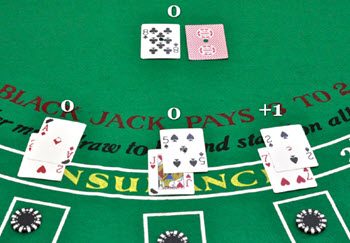
Poker

Poker is a god choice if you want to be able to earn money from gambling

Read More

Videopoker

Videopoker is another good option if you are able to find full pay machines that gives you an edge

Read More

Avoid these games

There are some casino games that you allways should avoid if your goal is to make money.

Read More

The rules of blackjack: A beginner's guide

The rules of blackjack: A beginner’s guide

Understanding the Basics of Blackjack

Blackjack, a game widely recognized and played across casinos around the globe, captivates players with its simplicity and strategic depth. Also known as 21, the primary goal in blackjack is to attain a hand value that is as close as possible to 21, without surpassing this number, while also trying to outdo the dealer’s hand value. Let’s delve deeper into the fundamental aspects of this exciting card game to provide a comprehensive guide for beginners.

The Deck and Card Values

In order to understand the game of blackjack, it’s crucial to familiarize yourself with the deck and the specific values assigned to each card. Blackjack is typically played using one or multiple standard 52-card decks. This implies that you will encounter various cards in the deck, each holding a particular value:

Number Cards (2-10): Each number card retains its face value. Therefore, a three of hearts is worth 3 points, a seven of diamonds is worth 7 points, and so on.

Face Cards (Jacks, Queens, Kings): These cards are all valued uniformly at 10, regardless of the suit. Their consistent value simplifies decision-making during gameplay.

Aces: The ace is a uniquely versatile card in blackjack, as it can either be valued at 1 or 11, depending on which value benefits your hand more. This flexibility allows players to craft potentially strong hands and reduce the risk of busting.

The Objective

The fundamental aim of blackjack is deceptively simple: beat the dealer’s hand without going over a total of 21. It is crucial for players to focus on crafting a more robust hand than the dealer while carefully managing the risk of “busting,” which occurs when a hand’s total exceeds 21. Success in blackjack involves balancing the pursuit of a strong hand with the prudence of knowing when to stand pat.

Game Setup

The game begins with each player placing their initial bets. Following the wagering, the dealer distributes two cards to each player and two to themselves. Typically, the dealer will deal one card face up, known strategically as the upcard, while keeping the other card hidden, referred to as the hole card. This setup forms the foundation for the strategic decisions that players will subsequently make.

Player Options

After receiving the initial hand, players are presented with several options, each carrying its own strategic implications:

Hit: Players can opt to take an additional card to increase the total value of their hand. The option to “hit” is open-ended, allowing players to continue receiving additional cards until they either decide to “stand” or their hand exceeds 21, resulting in a bust.

Stand: By choosing to “stand,” players signal that they are content with their current hand, thereby ending their turn.

Double Down: Players have the opportunity to double their original bet in exchange for committing to stand after receiving only one more card. This option can be advantageous when players have a hand with a strong likelihood of winning.

Split: If the initial two cards possess the same value, you can split them into two distinct hands. A second bet, equivalent to the original, must be placed on the new hand, effectively doubling the wager in play.

Surrender: In certain casino rules, players may choose to forfeit half of their bet and withdraw from the round, an action known as “surrender.” The surrender option is typically only available as the first action a player makes during their turn.

The Dealer’s Play

After all players have made their decisions, the dealer reveals their previously concealed hole card. It is important to note that the dealer is bound by stringent rules:

– The dealer must take hits until their hand accumulates a total of 17 or higher.
– In some casinos, dealers must stand on a “soft 17” (a hand that includes an Ace counted as 11), while others may require the dealer to continue hitting in this scenario.

If the dealer busts, all remaining players win by default. Otherwise, the closest hand to 21 between each player and the dealer determines the winner of the round.

Winning and Payouts

A player’s victory in blackjack is contingent on having a hand total that surpasses that of the dealer without busting. In the event of a standard win, the payout generally adheres to a 1:1 ratio based on the player’s original bet. Moreover, achieving a blackjack, which consists of an Ace paired with a 10-value card as the initial hand, typically earns players a premium payout of 3:2, assuming the dealer does not match this feat with a blackjack of their own.

Basic Strategy and Etiquette

Developing an understanding of basic strategy is integral to increasing one’s chances of winning at blackjack. This involves making informed decisions based on mathematical probability, such as knowing when to hit, stand, or double down. While the numerical aspect is significant, observing proper table etiquette is equally important. Players should be courteous, avoid unnecessary delays, and be mindful of both the written and unwritten rules of the casino in which they are playing. These practices not only enhance personal gameplay but also contribute to a positive atmosphere at the table.

For individuals seeking additional guidance and resources, enabling further enhancement of their blackjack skills, exploring Casino.org is worthwhile. This site offers comprehensive tips and strategies that can aid your understanding and strategic approach to blackjack.

Conclusion

Mastering blackjack is an endeavor that demands not only an understanding of the game’s rules but also the development of strategic thinking. As players gain experience and refine their strategies, they can enjoy the game more thoroughly and increase their chances of successful outcomes at the table. As with many casino games, regular practice and study can significantly enhance a player’s skills, transforming blackjack from a game of chance to a game ripe with strategic opportunity.
What is blackjack, and how is it played

What is blackjack, and how is it played

Understanding Blackjack

Blackjack, known globally as 21, commands a prominent presence in both bustling casinos and cozy home gaming environments. The allure of blackjack lies in its straightforward objective: players compete against the dealer to achieve a card total as close to 21 as possible, ensuring they do not exceed this threshold. Typically, the game involves one or several standard 52-card decks, adding layers of complexity and challenge to the experience.

Basic Rules of Blackjack

Blackjack’s charm also stems from its simplicity. At the core is understanding the intrinsic value attached to each card. Cards numbered 2 through 10 hold their face value. In contrast, face cards, including Jacks, Queens, and Kings, are valued uniformly at 10. The Ace is unique, offering flexibility; it can be counted as either 1 or 11, depending on which total provides the most advantageous hand.

The commencement of a blackjack game involves each participant receiving a pair of cards. Concurrently, the dealer receives two cards, typically with one card placed face up. This initial showcase of the dealer’s hand influences players’ subsequent decision-making processes.

Gameplay Options

During a blackjack game, participants encounter various strategic choices, each designed to enhance their probability of success or mitigate potential losses.

Hit: Selecting a “hit” allows the player to draw an additional card in hopes of improving their hand’s total value. Nonetheless, caution is warranted; should the player’s total exceed 21, they “bust,” resulting in an automatic loss.

Stand: Opting to “stand” means the player decides to retain their current hand total, refraining from drawing additional cards.

Double Down: This strategy enables players to double their initial bet after evaluating their first two cards. In exchange for raising the stakes, players receive just one additional card to finalize their total.

Split: When dealt two equally-valued cards, players have the opportunity to split them into separate hands. Each hand is played independently, necessitating an additional bet matching the original wager for the new hand.

Surrender: In certain gaming establishments, a surrender option allows players to concede their hand in exchange for recovering half of their bet, potentially limiting overall losses.

Dealer’s Play

Once players make their decisions, attention shifts to the dealer’s hand. The dealer’s actions are bound by stringent rules; typically, they must continue to draw cards until their hand totals at least 17. If the dealer’s total exceeds 21, all remaining players automatically win that round. If the dealer and a player do not bust, the comparison of hand values determines the winner. The hand closest in value to 21, without going over, prevails.

Winning and Payouts

Victory in blackjack manifests in several scenarios, often influencing the payout structure:

Natural Blackjack: Achieving a natural blackjack, where the initial hand totals 21 (comprised of an Ace and a 10-value card), is especially rewarding. This scenario typically offers a payout ratio of 3 to 2.

Regular Win: Winning by having a hand closer to 21 than the dealer results in a 1 to 1 payout.

Insurance Bet: If the dealer’s face-up card is an Ace, participants may opt for an insurance bet. This secondary wager is designed to protect against the dealer achieving a blackjack. If successful, insurance pays 2 to 1.

As players delve deeper into the nuances of blackjack, many resources stand ready to enhance understanding and strategic depth. Exploring detailed guides or specialized casino strategy platforms can provide valuable insights and bolster one’s proficiency in this enduring game of chance and skill.

For those eager to refine their blackjack skills, understanding the fundamental aspects of card counting, bankroll management, and probability calculations can offer strategic advantages. While not directly within the scope of this article, eager learners may find it beneficial to seek additional resources that align with their desire to master the intricacies of blackjack.

Counting Cards

Welcome to my website about counting cards and other strategies that you can use to earn money in casinos around the world. All strategies we discuss on this website are 100% legal and can be very profitable if you execute them skillfully. I will also tell you more about the games and bets you should avoid. The games and bets will always cost you money.

Let us start out by talking about counting cards.

What is counting cards?

Counting card is a technique that allows you to know when the odds are in your favour at the blackjack table so that you can bet bigger when you got the edge over the casino. As a player, you are allowed to decide when to draw a card and when to stand- Click the link to learn basic blackjack strategy. The bank is not allowed this luxury. There are strict rules for when the bank has to draw and when it has to stand. This allows you as a player to get an edge when there is a lot of 10s in the deck since this will cause the bank to bust (go over) more often. The more 10s there is in the deck the more favourable the deck will be to you as a player.

There are several different methods for counting cards but they are all designed to allow you to know how many high and how many low cards are left in the card shoe.

Is card counting legal?

vinnare.seYes. Card counting is 100% percent legal. It is a way to play the game as good as possible. You do not cheat or use any information that is not freely available in the game. Anyone who tells you that card counting is illegal is misinformed or is intentionally trying to lie to you. This is, unfortunately, a rather common misconception caused by countless articles, movies and TV shows that have incorrectly shown card counting as something illegal or unethical. Casinos do what they can to get an edge. So should you. Playing the game well is never cheating.

I repeat. Counting card in blackjack is not illegal, it is not unethical and it is not cheating.

Can they take your winnings if you count cards?

No. You have not cheated or done anything illegal. Any money that you have won during the game is yours to keep. Any properly run casino will honour this and give you your money without complaints. This might not be the case if you play in more shady casinos.

Can you count cards online?

The answer to this question is generally no. You can not count cards in a regular online casino game. Each game is completely random and is not affected by the previous game. IE each game is dealt with a new full show. It is similar to playing at a table with an automatic card shuffler that reshuffles the shoe between each hand.

It is possible to count cards in some LIVE online casinos. Online casinos where you watch a dealer deal the cards from a real shoe in front of a web camera. Any LIVE casino game that does not use an automatic card shuffler is similar to a regular game and you can count cards while playing in these games.

Can you get banned from a casino by counting cards?

Yes. Most casinos will ban you if they discover that you are counting cards. Your face will be added to their facial recognition software and they will prevent you from playing in the casino in the future. If you do succeed in sneaking in you can be removed from the premises. Any money you win before they do will once again be yours.

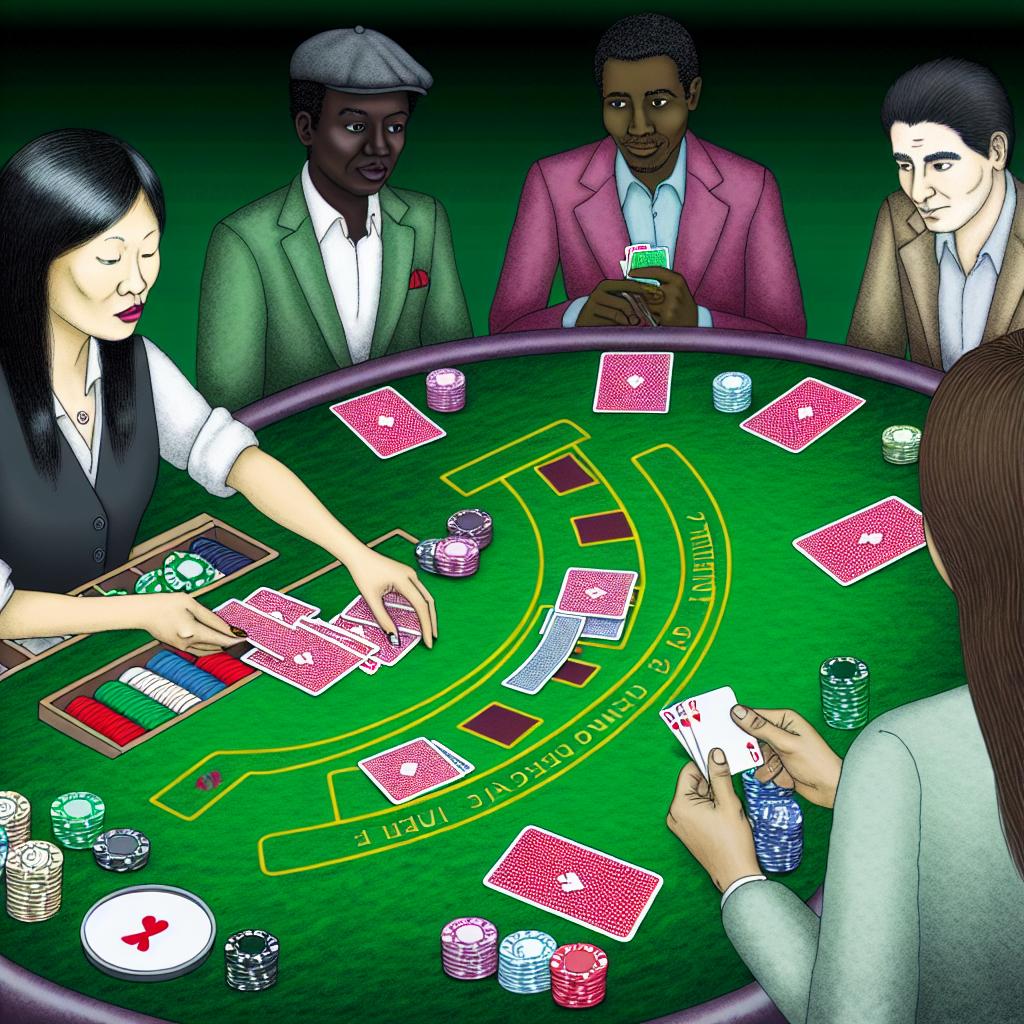
Many casinos around the world use a shared database of undesired individuals. This list includes card counters and if you get banned from one casino you will find that you have been banned from a large number of the world’s casinos. Almost all major casinos are a part of this cooperation. You can find it hard to find any casino that will let you play after you have been marked as a card counter.

The casinos are allowed to deny your patronage and there is little you can do if you do get banned.

Is it hard to learn how to count cards?

Binary options

Binary options can be a good option if you are looking for a “game” that you can play online and make money. Binary options allow you to speculate on future market movements. They are sometimes referred to as a financial instrument and sometimes as a game.  Skilled traders can make large profits.  Learn more about binary options.

No. It is relatively easy to learn how to count cards. You can learn the basics in a few hours and it does not take very long to become good at it. You do not need to be able to remember all the cards that have been played. You only learn how to calculate and keep one number in your head. This number will then tell you when the odds are in your favour.

There are several different techniques that you can learn and there are a large number of different internet guides that can teach you how to use each technique. Chose one technique and devote some time to learn how you can use it to count cards and win at blackjack.

Once you know how to play it can be a very good idea to play some low stakes blackjack to perfect your new skill before you start betting more money.

Do you need to be a genius to count cards?

NO!!! This is a common misconception. You do not need to be a genius or especially good at math to be able to learn how to count cards. Most people can learn how to count cards. This is true even if you think math is hard.

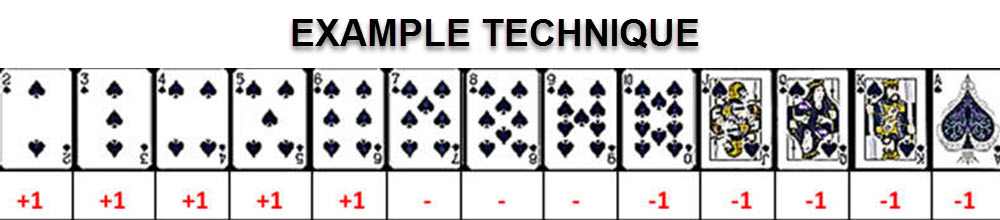
There is surprisingly little math require to count cards once you know the system. You really only need to know +1 and – 1 to be able to count cards. It is that simple!

The hard part is developing card counting systems. This has already been done by the people who first developed these card counting systems. You only need to know very basic math to use them.