
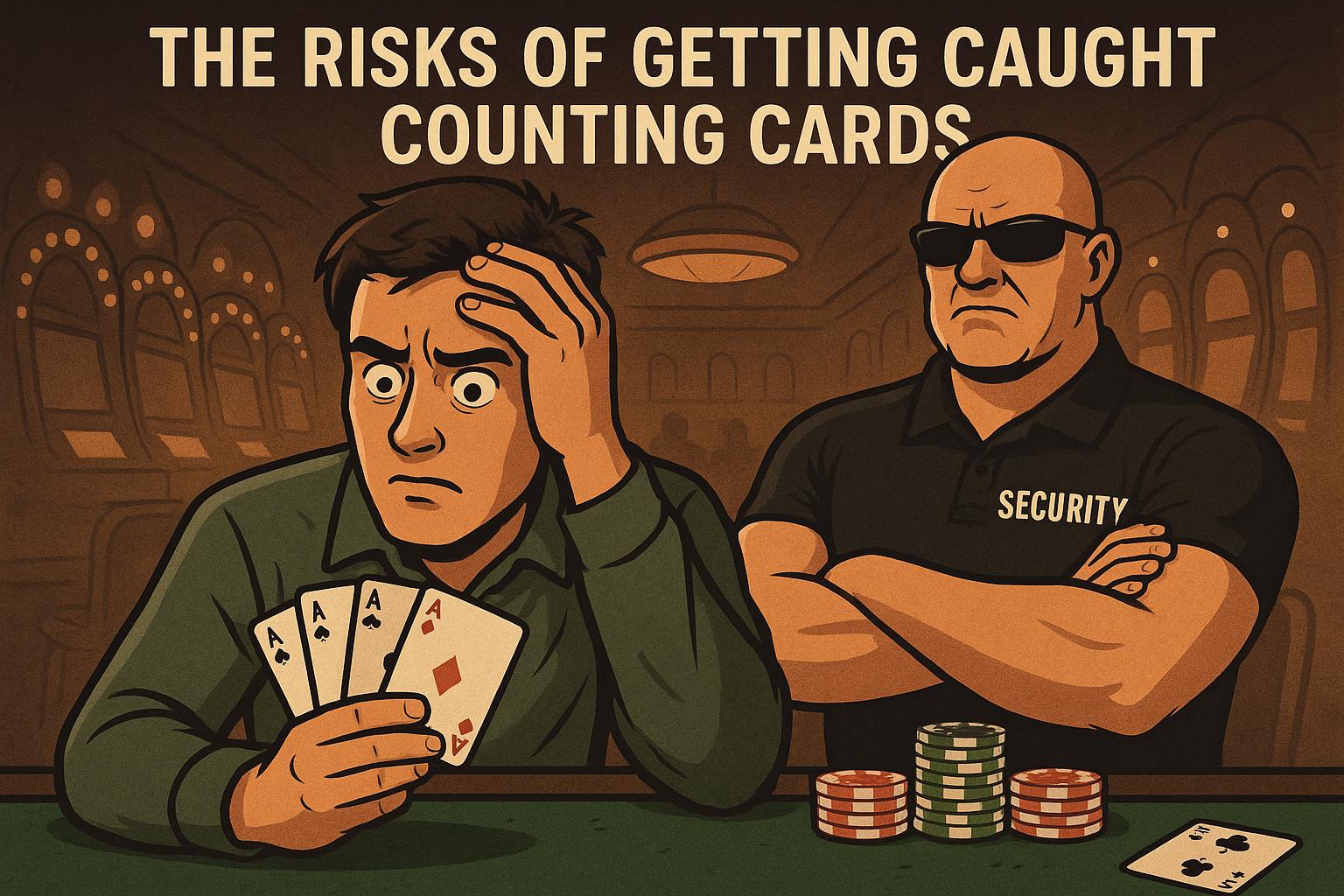
The Risks of Getting Caught Counting Cards
Understanding Card Counting
Counting cards, a technique used primarily in blackjack, allows players to determine the likelihood of certain cards being dealt in subsequent hands. By keeping a mental tally of high and low cards, players can make informed decisions and alter their bets to gain an advantage over the casino. While the act of card counting itself is not illegal, casinos are well within their rights to deter such practices since it shifts the balance from the house back to the player, potentially threatening casino profits.
Legal Implications
No specific laws outlaw counting cards, providing a legally gray area for practitioners. However, casinos reserve the right to refuse service to patrons they suspect of employing this strategy. If identified as a card counter, one could face removal from the premises and be prohibited from returning, sometimes indefinitely. In certain jurisdictions, the strategic collaboration among casinos allows them to share information about individuals suspected of counting cards. This shared intelligence can lead to a person being banned from numerous gambling venues, significantly limiting their ability to play professionally or recreationally.
Surveillance and Security Measures
Casinos invest heavily in surveillance systems and employ a multitude of tactics to identify and manage card counters. Advanced video surveillance, coupled with facial recognition technology, forms the backbone of their monitoring efforts. Additionally, some casinos hire previous card counters or gaming experts specifically to spot the subtle signs of card counting, focusing on detecting deviations from typical betting patterns. Furthermore, pit bosses and floor staff are trained to watch games closely, alert to behaviors that suggest counting tactics. This combination of human vigilance and technological sophistication represents a formidable challenge for anyone attempting to count cards.
Psychological and Social Consequences
Being caught counting cards can have considerable psychological ramifications. When escorted out of a casino, there is often a significant degree of embarrassment involved, particularly if the event occurs in full view of other patrons. This scenario can be particularly damaging to professional gamblers who depend heavily on their reputation within the gambling community. The label of a card counter carries a social stigma, which can lead to isolation and negatively affect personal and professional relationships within this tight-knit community.
Financial Risks
Card counting also comes with significant financial risks. In some instances, if a player is caught, the casino has the authority to confiscate any chips and winnings accrued during the time the player was counting cards. Such financial setbacks are compounded by the investment players have made in learning and perfecting their card counting skills, as well as in the time they have spent honing their abilities, which may be rendered worthless if they are frequently barred from playing. Additionally, the growing reliance on technology means that even players with honed skills may find their strategies increasingly ineffective due to casino countermeasures.
Technological Countermeasures
In an effort to neutralize card counting, many casinos have introduced technological tools such as continuous shuffling machines or automatic card shufflers. By constantly reshuffling the deck after each hand, these machines effectively randomize the card order, greatly diminishing the practicability and success rate of traditional counting methods. This technological innovation presents a substantial hurdle for card counters, forcing them to either adapt to these changes or consider alternative strategies.
The Ethical Debate
The discussion around the ethics of card counting is ongoing and often contentious. Proponents argue that it is a skill-based strategy requiring considerable mental acuity and practice, akin to any other strategic approach utilized in games. In contrast, detractors argue that card counting takes advantage of predictable patterns in card decks, undermining the principle of random chance which underlies most casino games. This debate continues to fuel discussions within both the gambling industry and the wider public, reflecting differing views on what constitutes fair play.
Alternative Strategies
For those apprehensive about the repercussions of card counting, exploring alternative gambling strategies may prove beneficial. These strategies can offer ways to engage with games of chance without attracting undue attention or flouting casino restrictions. By balancing skill and chance, one can enjoy the excitement of gambling while adhering to casino regulations and avoiding potential conflicts with casino authorities.
Conclusion
Ultimately, card counting, while an intriguing and skill-based approach to blackjack, is rife with risks. Players interested in this method must consider the various implications, from legal and financial to social and psychological, before deciding to employ it. Given the challenges posed by modern surveillance and countermeasures, as well as the potential for reputational damage, prospective card counters might want to evaluate whether the potential benefits truly outweigh the substantial risks involved. Exploring safer and compliant gambling options may be a wiser choice for many.