The differences between European and American blackjack

The differences between European and American blackjack

The Basics of European and American Blackjack

Blackjack is a popular casino game enjoyed worldwide, with two of the most prevalent variations being European and American blackjack. Understanding the distinctions between these versions can enhance a player’s strategic approach and overall experience. By familiarizing themselves with the rules, nuances, and key differences in gameplay, players can tailor their strategies accordingly to potentially increase their odds of success.

Card Distribution and Decks Used

The number of decks used in a game of blackjack can significantly influence the game’s dynamics. In European blackjack, typically two decks of cards are used. The relatively low number of decks simplifies the card counting process, allowing players to keep better track of the cards already played, which can be an advantage for skilled card counters.

In contrast, American blackjack often employs six to eight decks. This increased number of decks adds complexity to card counting strategies, making it more challenging to predict which cards remain in play. This difference in deck size requires players to adopt different approaches depending on the version of the game they are engaging with, thus affecting the probability of certain outcomes.

Dealer’s Hole Card

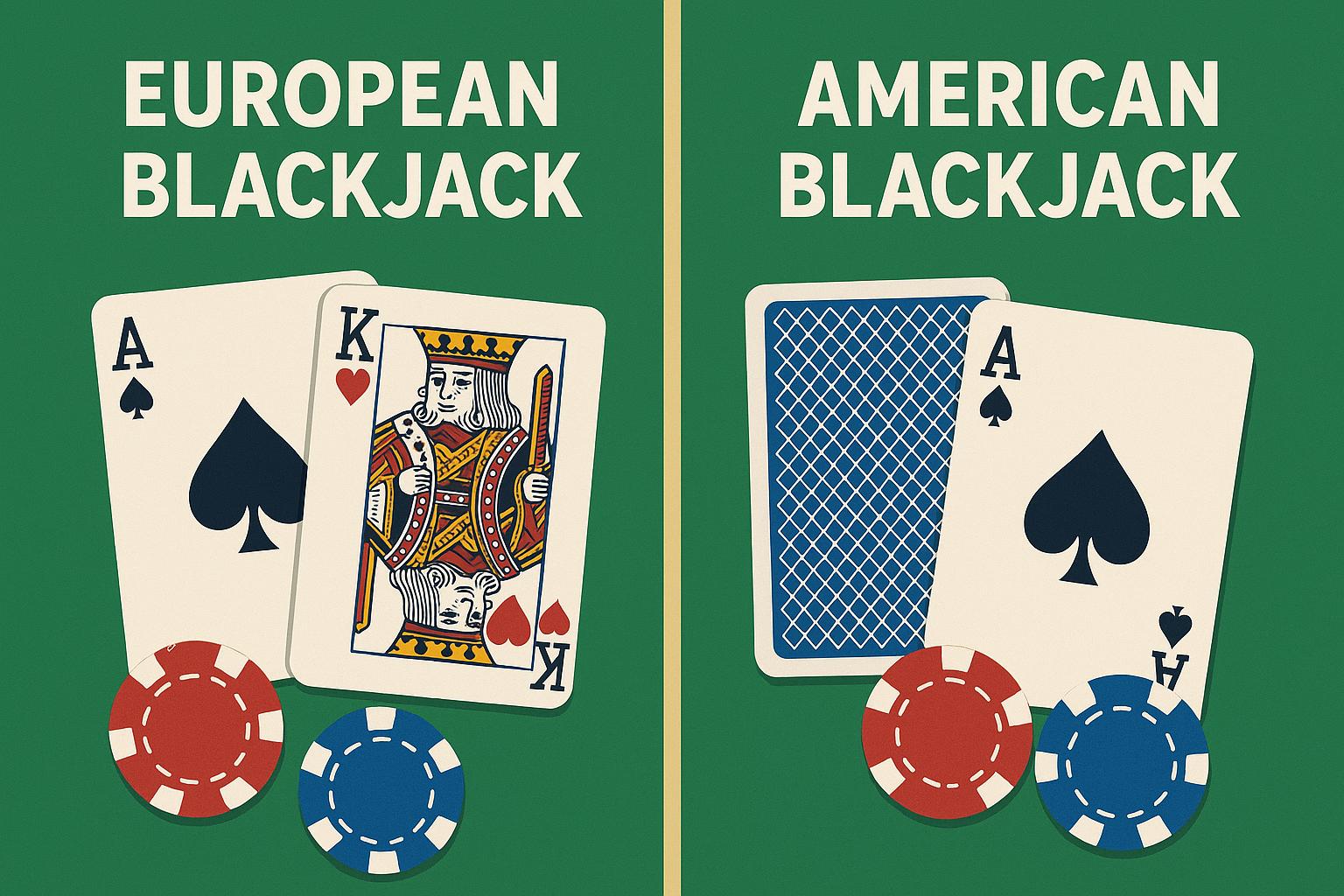
A key difference between European and American blackjack lies in how the dealer handles their hole card, which is the card dealt face down. In American blackjack, the dealer receives their hole card immediately after the initial deal. If the dealer’s visible card is an Ace, they will check the hole card before the players proceed with their turns. If the dealer has a blackjack, the game ends immediately, and players lose their bets unless they also have a blackjack.

Conversely, in European blackjack, the dealer does not receive a hole card until players have completed their turns. This rule adds a layer of uncertainty for players, as they make decisions without knowing the dealer’s complete hand. Consequently, players might strategically hit or double down, only to discover later that the dealer possesses a blackjack, resulting in the loss of their bets. This variation of play increases the risk involved and makes strategy adjustments essential for players focused on maximizing their potential for success.

Player Options and Rules

Both versions allow players to hit, stand, or split their cards. However, the rules governing these moves can differ significantly between the two versions. In European blackjack, there are limitations regarding doubling down. Players can only double down on hands with a total value of 9, 10, or 11, which restricts their ability to capitalize on favorable situations during the game.

This restriction contrasts with American blackjack, where players can double down on any combination of cards. This greater flexibility in doubling down allows American players to take advantage of more opportunities to increase their potential gains.

Furthermore, the option to surrender, which allows players to forfeit half their bet if they believe they have a losing hand, is typically available in American blackjack. This option enables players to cut their losses under unfavorable circumstances and effectively manage their bankroll over a longer gaming session. However, surrendering is generally not an available choice in European blackjack, requiring players to play more cautiously to avoid significant losses.

House Edge

The rules regarding the dealer’s hole card and the player’s options directly affect the house edge in each blackjack variant. The house edge represents the advantage held by the casino over the players and is a crucial factor for players to consider when formulating their strategies.

Generally, the house edge is slightly higher in European blackjack due to the limitations on doubling down and the lack of a surrender option. These restrictions can increase the difficulty of adopting strategies such as card counting, and they may necessitate an adjustment in betting approaches for players seeking to minimize the house’s advantage over them.

Conclusion

Understanding the differences between European and American blackjack can significantly influence a player’s strategy and potentially improve their odds. By recognizing the gameplay nuances specific to each version, players can adapt their techniques and take full advantage of favorable situations.

For players eager to explore more about blackjack strategies and the differences between variations, consider visiting informative resources such as casino guides or expert gaming websites for further reading. These resources can offer valuable insights and tips on how to enhance one’s chances of winning in blackjack and other related casino games. By educating themselves about the detailed aspects of different blackjack versions, players can fine-tune their strategies and enter the casino with confidence and a deeper understanding of the game.
How to play progressive blackjack

How to play progressive blackjack

Understanding Progressive Blackjack

Progressive Blackjack presents an exciting twist on the classic game of blackjack by introducing a side bet that gives players the opportunity to win a progressive jackpot. Unlike traditional blackjack, where the objectives are primarily about achieving a hand value as close to 21 as possible without exceeding it, Progressive Blackjack brings an additional layer of excitement with its jackpot feature. This document provides a detailed guide on how to engage with and understand this popular casino game.

The Basic Rules of Progressive Blackjack

At its core, Progressive Blackjack maintains the basic structure and objectives of regular blackjack. The primary goal for players is to have their cards total closer to 21 than the dealer’s without going over. The game is typically played with multiple decks of cards, and the card values remain unchanged from the standard game: the numbered cards hold their face value, all face cards are worth 10, and aces are versatile, counting as either 1 or 11, depending on what best benefits the player’s hand.

Placing the Progressive Side Bet

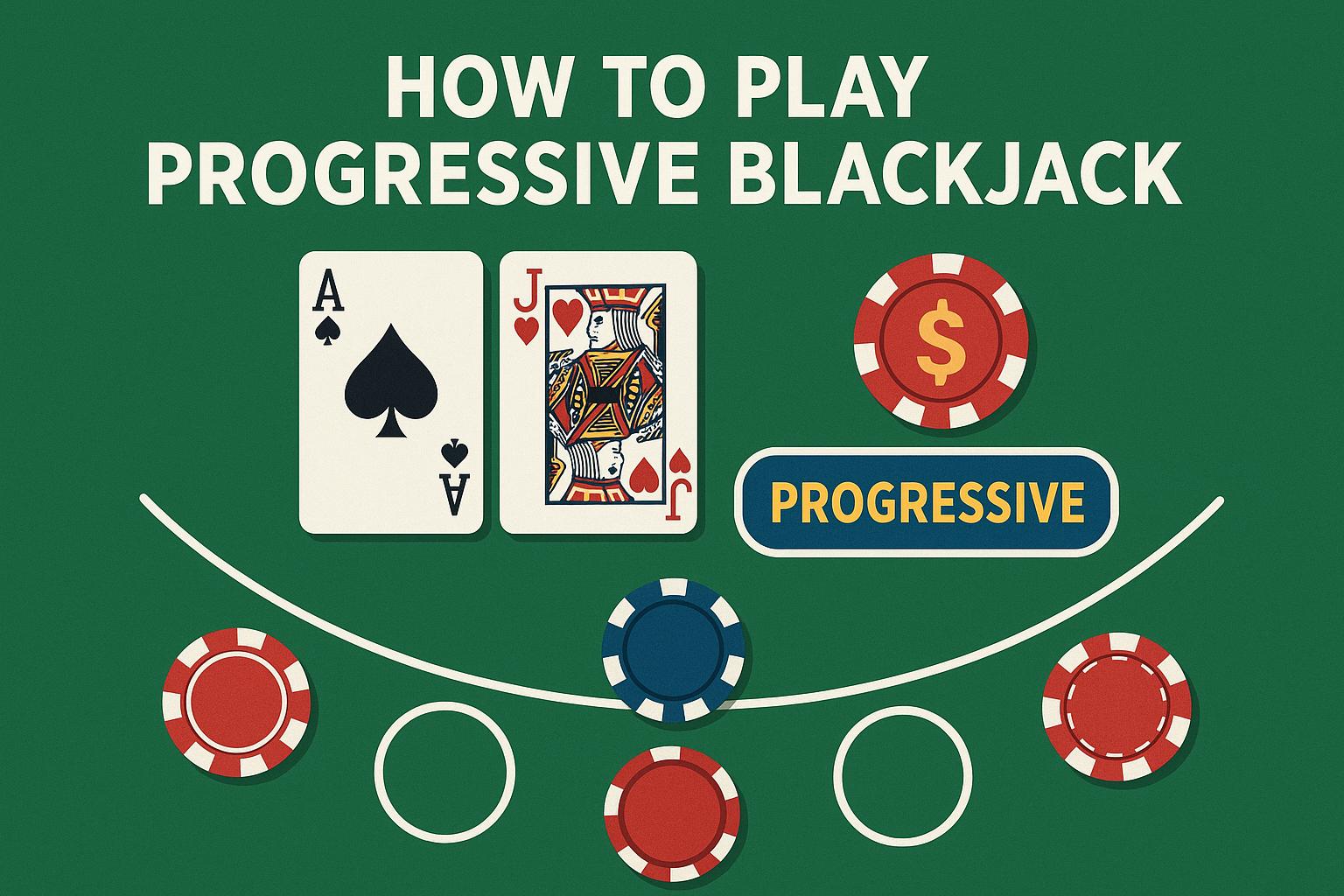
A distinctive feature of Progressive Blackjack is the side bet, which players can place in addition to their main wager. This side bet is a prerequisite for participating in the pursuit of the progressive jackpot. Commonly, the side bet is a set amount, often around $1, and it is these contributions that feed into and increase the jackpot over time as more players engage in the side bet option.

Qualifying for the Jackpot

To be eligible for winning the progressive jackpot, players must achieve specific card combinations during the game. Typically, this involves acquiring a combination of suited cards, such as four aces of the same suit. However, it is important to note that the specific requirements for hitting the jackpot can vary between different casinos. Therefore, understanding the particular criteria established by the casino where you are playing is essential for those aiming to claim the jackpot.

Strategies for Playing Progressive Blackjack

The allure of the progressive jackpot can be quite enticing, but it’s crucial for players to remember that a solid strategic approach to the main game remains vital. This involves understanding when it is best to hit, stand, double down, or split pairs, all decisions informed by the cards you hold and the dealer’s visible card. Employing effective strategy not only helps sustain your bankroll but also prolongs your time at the table, increasing the chances to win the jackpot over time.

Managing Your Bankroll

Given that the progressive side bet doesn’t influence the regular blackjack game outcomes but adds extra excitement and cost, wisely managing your bankroll becomes even more critical. The side bet, while appealing, also necessitates an additional expenditure. Players should approach this facet of the game with an understanding of the financial commitment involved and a readiness to experience potential losses should the side bet not result in a jackpot win.

Understanding Odds and Payouts

The odds and payouts associated with hitting a progressive jackpot can vary significantly, heavily influenced by the size of the jackpot at the point of winning. Some casinos may offer smaller consolation rewards for achieving lesser winning combinations that don’t quite hit the jackpot. These consolation prizes, however, usually pale in comparison to the full jackpot payout, but they do provide something of a reward for nearing the elusive jackpot combination.

Conclusion

Progressive Blackjack provides an exhilarating variation on the traditional game, with the added incentive of a progressive jackpot presenting the possibility of substantial winnings. It’s imperative that players interested in Progressive Blackjack become acquainted with the rules and odds related to the jackpot side bet. Approaching the game with both strategy and caution is crucial to maintaining a rewarding experience. For individuals wishing to deepen their understanding of gameplay mechanics, exploring [strategy guides](#) and available casino resources can offer valuable insights and enhance the overall gaming experience.

The strategy differences in Pontoon blackjack

The strategy differences in Pontoon blackjack

Understanding the Game of Pontoon

Pontoon Overview

Pontoon, often considered an intriguing variant of the traditional blackjack game, brings with it an array of strategic divergences vital for enthusiasts and serious players to grasp. While the overarching aim remains common – to obtain a hand value that is closer to 21 than the dealer’s – without overstepping this limit, the rules and methods diverge significantly, offering a fresh perspective on gameplay.

Key Rule Differences

In traditional blackjack, players benefit from the visibility of one of the dealer’s cards. However, Pontoon heightens the complexity by dealing both of the dealer’s cards face down. This obscurity necessitates a more profound reliance on statistical probabilities, alongside the player’s understanding of typical dealer behaviors. Consequently, adopting strategic play becomes even more pivotal as players navigate this uncertainty.

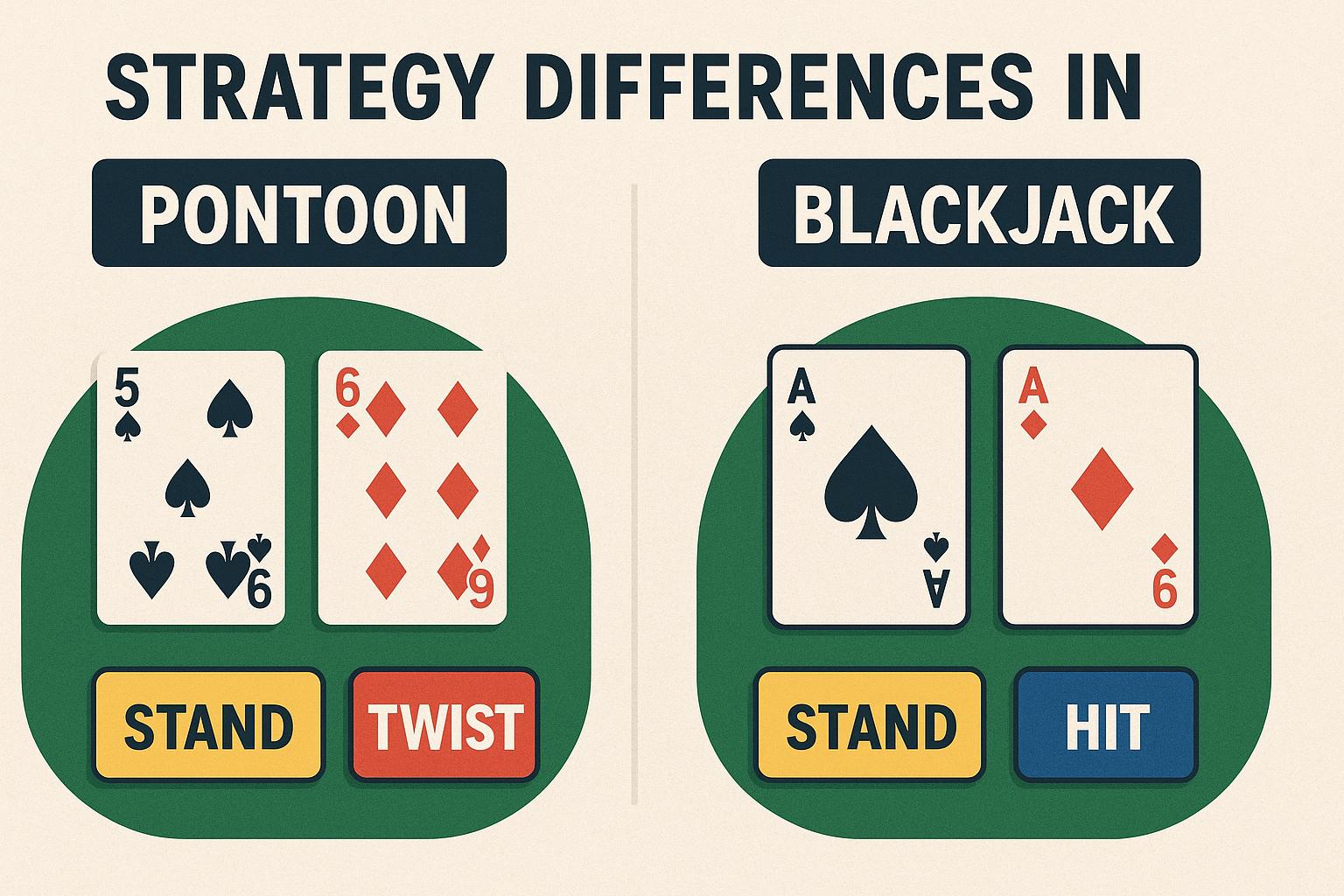
A considerable rule variation is how Pontoon values certain hands. The titular hand – an ace coupled with a card valued at ten – outstrips all other combinations. Notably, it surpasses even the five-card trick, a hand formed by five cards totaling 21 points or fewer. The supreme nature of a Pontoon hand significantly influences splits, hits, and stands, prompting players to recalibrate their decision-making processes aiming for such coveted hands.

Adjusting Betting Techniques

Due to both dealer cards being concealed, players typically lean towards more conservative betting strategies. This caution persists until there is a clearer understanding of the game’s trajectory. By meticulously counting cards and assessing observed hands, players can adeptly calibrate their bets, thus striking a finely-tuned balance between risk and potential gain.

Doubling Down emerges as a critical opportunity in this context. Given the hidden nature of the dealer’s holdings, doubling down requires judicious selection of circumstances, generally gravitating towards situations where the player’s hand has a high probability of triumph following the acquisition of just one more card. A keen focus on the statistical likelihood of the dealer busting reveals paths to favorable outcomes.

The Impact of Splitting and Doubling Rules

The rules governing the splitting of pairs in Pontoon can vary drastically from what is typical in traditional blackjack. This variation can notably alter strategic choices. Some casino versions permit players to execute multiple splits or even resplit aces, but others may enforce stringent limitations. As such, it proves crucial for players to gain familiarity with the precise casino rules where they find themselves playing.

Such nuances dictate the direction of players’ strategies in terms of splitting. Given potentially restrictive or alternatively favorable conditions, players might split against apparently weaker dealer odds or capitalize on promising doubling opportunities. Recognizing these conditions and responding appropriately can sway the outcome of a game significantly.

The Importance of Flexible Strategy

Achieving success in Pontoon necessitates a highly adaptable strategy. Players benefit from remaining perceptive to the flow of cards, continually refining their tactics in response to the dynamically evolving game state, as well as the specific rules applied at their table. A crucial skill involves seamlessly transitioning between a defensively cautious play style to a more bold and aggressive betting form, depending on circumstance.

Understanding and executing effective strategies tailored to the unique mechanics and rules of Pontoon forms a critical pathway to success. While foundational gambling principles such as psychology and probability theory retain their relevance, the nuanced differences inherent in Pontoon demand players cultivate constant awareness and adaptability.

To those who seek to delve deeper into the nuanced world of gambling strategy and acquire more insights and tips specific to Pontoon, exploring resources like Gambling Strategy can prove invaluable. These platforms offer extensive articles and insights, further equipping players with theoretical and practical wisdom.

The Appeal of Pontoon

Pontoon’s unique blend of complexity, strategic depth, and exciting gameplay dynamics attract a diverse range of players. Newcomers and seasoned gamblers alike find the variant offers a refreshing challenge beyond traditional blackjack. With rules that emphasize hidden information and encourage strategic decision-making, Pontoon requires players to be both analytical and adaptive.

The immersive commitment involved in honing Pontoon skills promotes a deep engagement with gambling strategies and mechanics. Players must consider evolving scenarios, adjust to specific house rules, and maintain a balance between risk-taking and caution. This constant engagement fosters a deeper appreciation not just for Pontoon itself, but for card games and gambling strategy as a whole.

As with any game rooted in both chance and skill, understanding Pontoon inside and out can greatly enhance a player’s enjoyment and potential profitability. The central thrill lies in the unpredictable nature of each game, tempered by the possibility of steering outcomes through informed and strategic play.

In conclusion, Pontoon offers an engrossing variant of blackjack that demands a nuanced understanding of its distinctive rules and tactical play. Mastering its subtleties can aid players in crafting robust strategies that elevate both their experience and success.

How to play Double Exposure blackjack

How to play Double Exposure blackjack

Understanding Double Exposure Blackjack

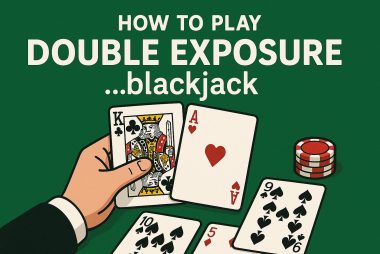
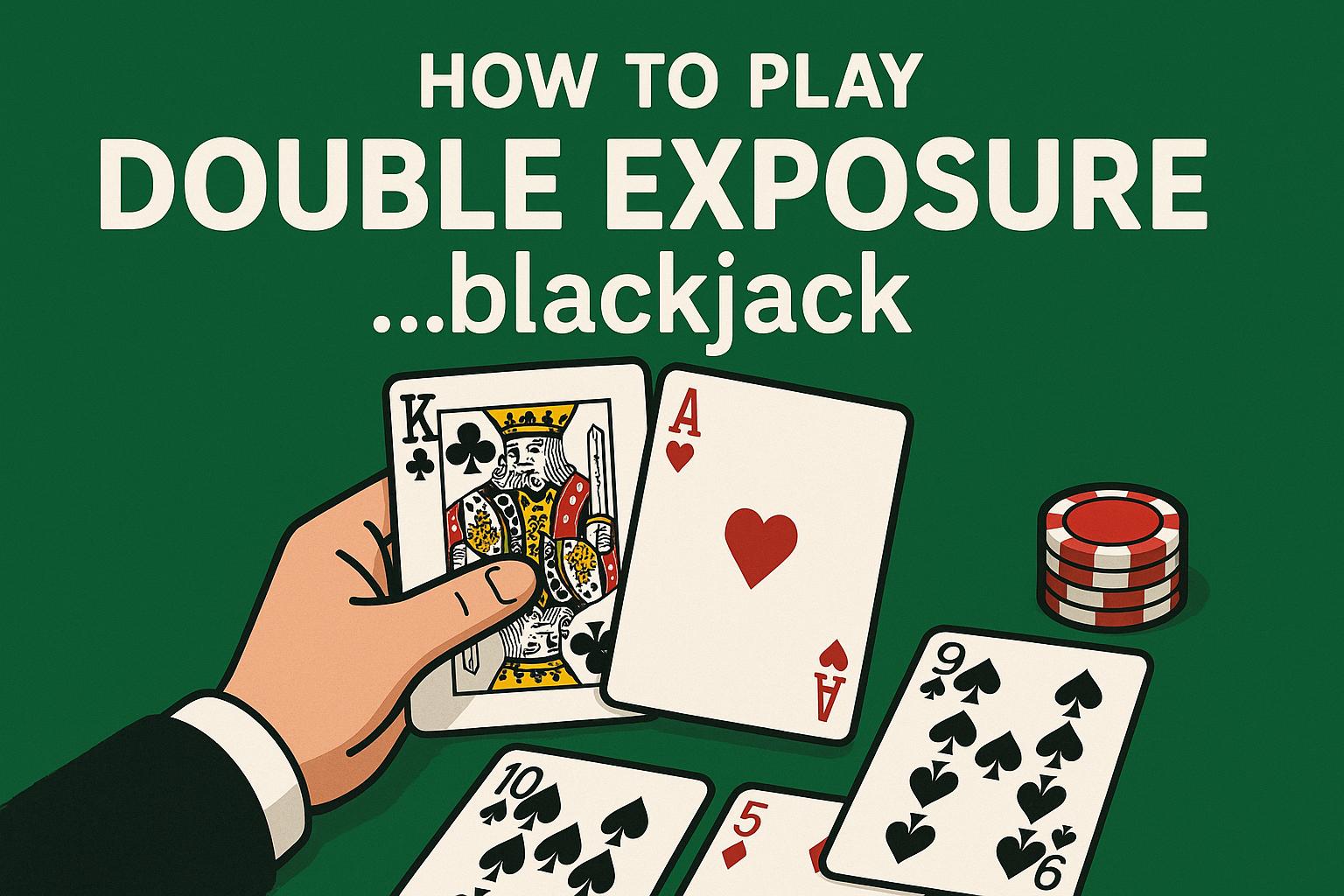
Double Exposure Blackjack is a popular variation of the classic casino card game that features unique rules and strategic approaches. As opposed to traditional blackjack where the dealer’s second card is kept hidden, Double Exposure presents both dealer cards face up for the players to see. This distinct difference provides players with more information to strategize effectively but is counterbalanced by modified rules designed to maintain the house edge.

Basic Rules of Double Exposure Blackjack

While Double Exposure Blackjack rules can vary slightly from one casino to another, there are several key aspects that commonly remain unchanged:

Dealer Shows Both Cards:

The fundamental trait of Double Exposure Blackjack is that both dealer cards are visible. This transparency gives players a strategic advantage, enabling more calculated betting decisions based on informed predictions.

Dealer Wins Ties:

A distinctive rule in most versions, except when a player has a blackjack, is that any tie results in the dealer winning. This creates a significant shift from the typical blackjack game and challenges players to adopt new strategies to minimize losses due to ties.

Player Blackjack Pays Even Money:

In Double Exposure Blackjack, players receive a 1:1 payout for a blackjack, rather than the traditional 3:2 payout found in conventional blackjack games. This change affects how much a player can potentially win when achieving a blackjack, altering incentive structures.

Dealer Hits on Soft 17:

Another rule variation includes the dealer hitting on a soft 17, which includes any hand containing an ace and totaling either seven or 17. This rule makes it slightly tougher on players as it increases the chances of the dealer improving their hand.

Limited Doubling Down:

Players are often restricted to doubling down only on hard totals of 9, 10, or 11. This limitations means that players have fewer opportunities to increase their stakes, impacting potential payout amounts.

No Insurance or Surrender:

Unlike traditional blackjack, in Double Exposure Blackjack the option for insurance or surrender is typically not available, further altering the player’s strategy decisions.

Strategies for Double Exposure Blackjack

The dual visibility of dealer cards requires players to adjust their strategies considerably in Double Exposure Blackjack as opposed to the standard version. Here are several strategic considerations for players:

Adjusting for Dealer’s Cards:

With visibility into both dealer cards, players have a more precise picture of potential outcomes. For example, if the dealer’s total is 17 or higher, players can deduce in real-time how likely the dealer is to bust, which plays a critical role in deciding whether to hit or stand.

Playing Blackjacks:

Given that player blackjacks pay even money, adjusting the standard blackjack strategy is essential. Instead of aggressively doubling down, players need to evaluate their potential returns and might lean towards more conservative plays.

Avoiding Ties:

Given that ties favor the dealer, players must be ready to adopt a more aggressive stance when necessary. Knowing when to hit or stand becomes even more critical in preventing ties; thus, risk tolerance adjustments may be required in high-stake scenarios.

Variations and Rule Changes

Although the core principles of Double Exposure Blackjack remain constant, you may encounter variations in rules at different casinos. Understanding specific house rules becomes crucial before playing. Some establishments might allow doubling down on any cards, while others permit multiple cards to be split after the initial deal, all of which impact strategic decisions.

Conclusion

Double Exposure Blackjack is a blend of strategic depth and luck-driven excitement, providing a refreshing twist on the traditional blackjack game. With the added transparency of the dealer’s hands, players gain valuable insights, though this advantage is balanced by factors like dealer-favorable ties and reduced blackjack payouts to maintain the house edge. Whether you’re new to blackjack or a seasoned player, delving into the intricacies of Double Exposure Blackjack can enhance both your understanding and enjoyment of the game while offering opportunities to refine your tactical approach.